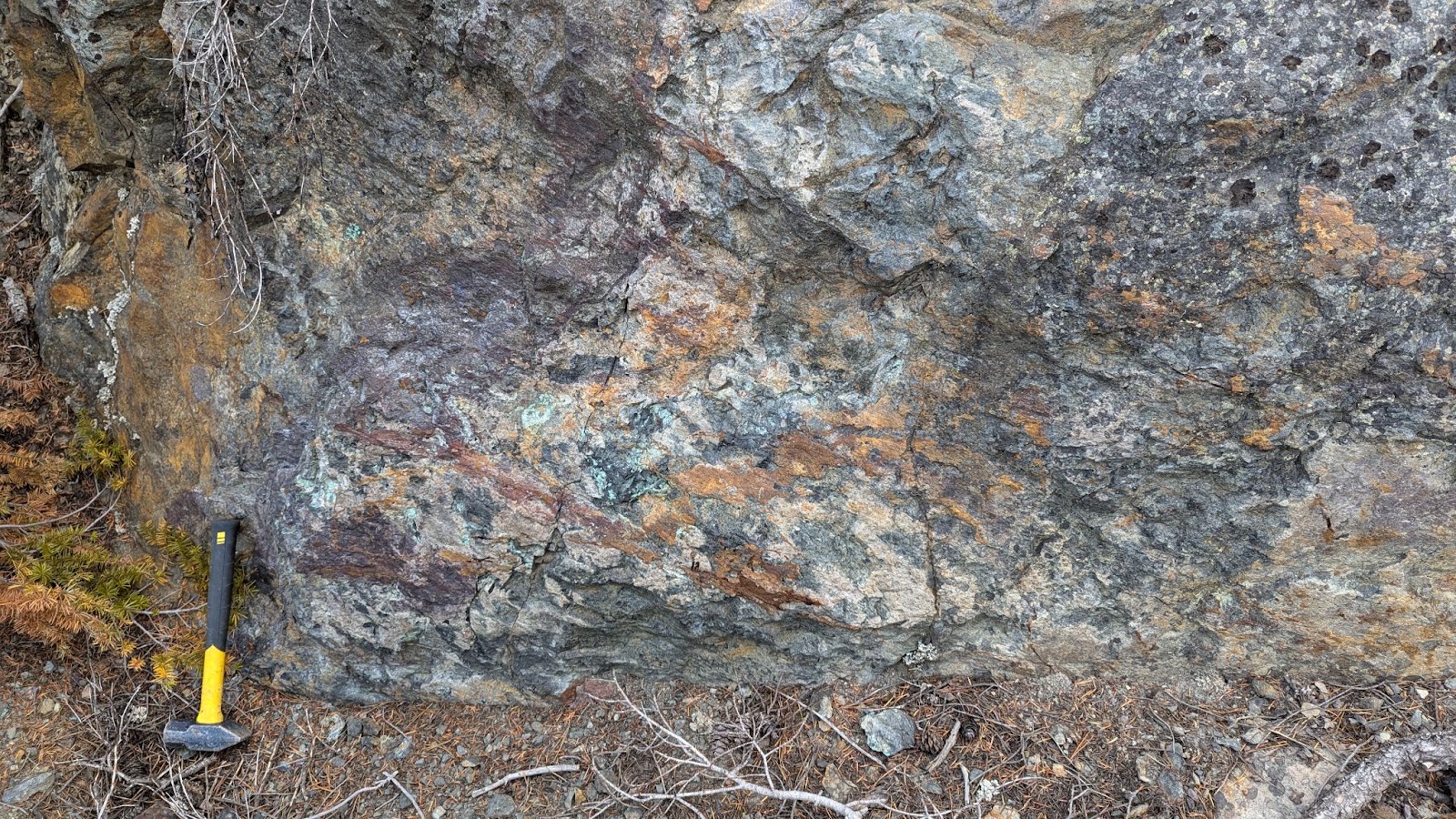
Immediate exploration targets
First modern geophysics defines a major untested large-scale target at Original-Diane and South zones
Chargeability (red), resistivity (yellow), magnetic low (blue).
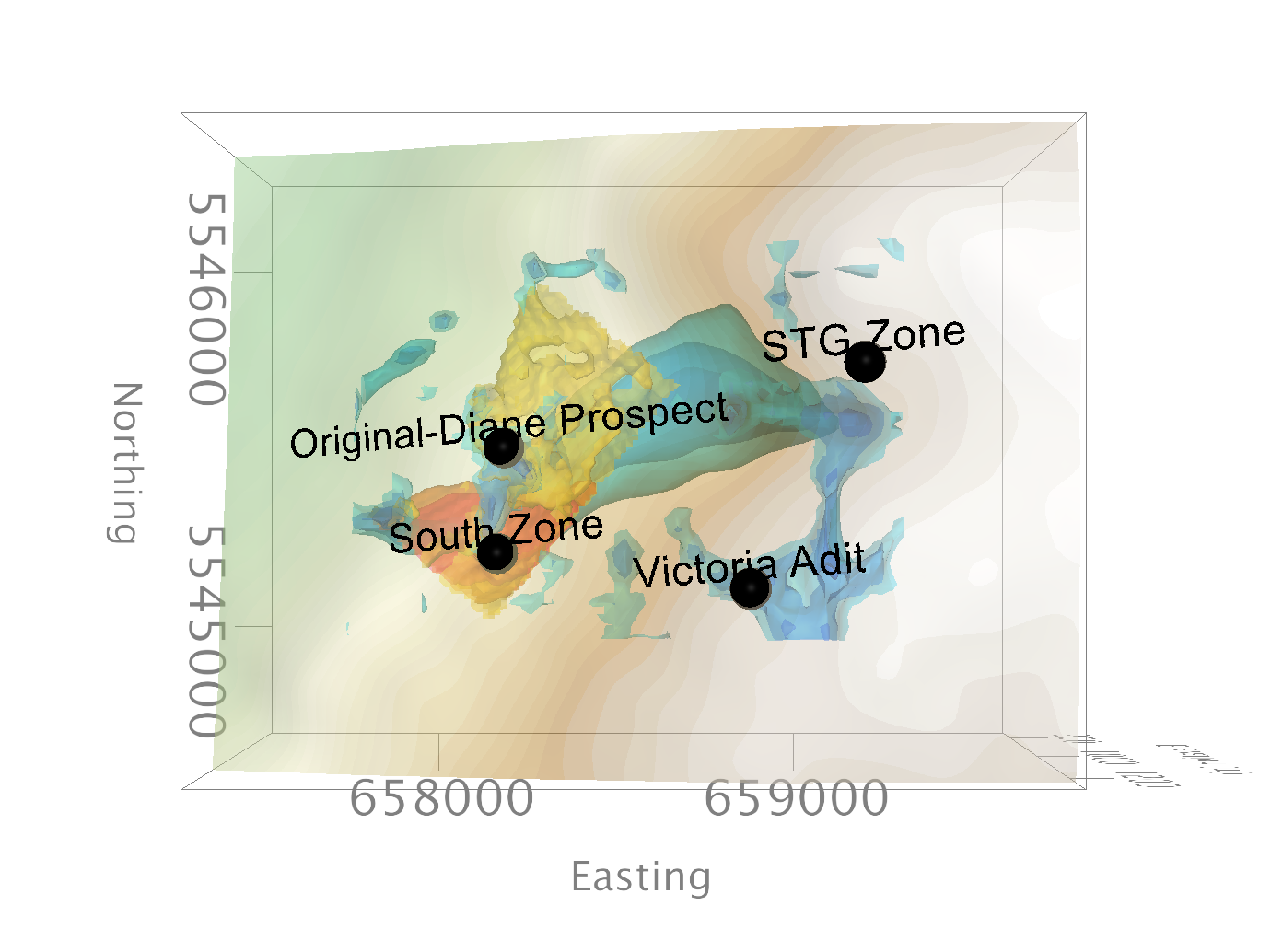
- Recent, comprehensive geophysical surveys revealed multiple previously unrecognized magnetic and induced polarization (IP) anomalies previously unknown at the time of the 1988 drill program
- 2023 airborne survey outlined magnetic low and suspected hydrothermal alteration zone within a broader ~5 km magnetic high belt
- 2020 IP survey identified robust chargeability anomaly exceeding 400 m in strike length beneath Original-Diane and South zones and remains open to the southwest
Original Diane Zone
- Highly-mineralized Au-Ag-Cu zone with surface sampling highlights reaching 27.19% Cu, 56.71 gpt Au
- Location of the 1988 9-hole shallow drill program that delivered encouraging Copper & Gold intercepts
- The 1988 drill program intersected fractured, mineralized zones characterized by quartz and silicified volcanics, with widespread limonite boxwork and patchy pyrite overprinting chloritic volcanics containing specular hematite [1]
- North Valley interprets these veins as potentially forming within the lithocap of an underlying mineralized porphyry system
South Zone
- ~200 m south of the Original Diane target
- Further extension of IP chargeability anomaly
- Never drill tested
- Historic trench sampling returned encouraging copper grades of 0.45% Cu over 2 m and 0.20% Cu over 7 m [2]
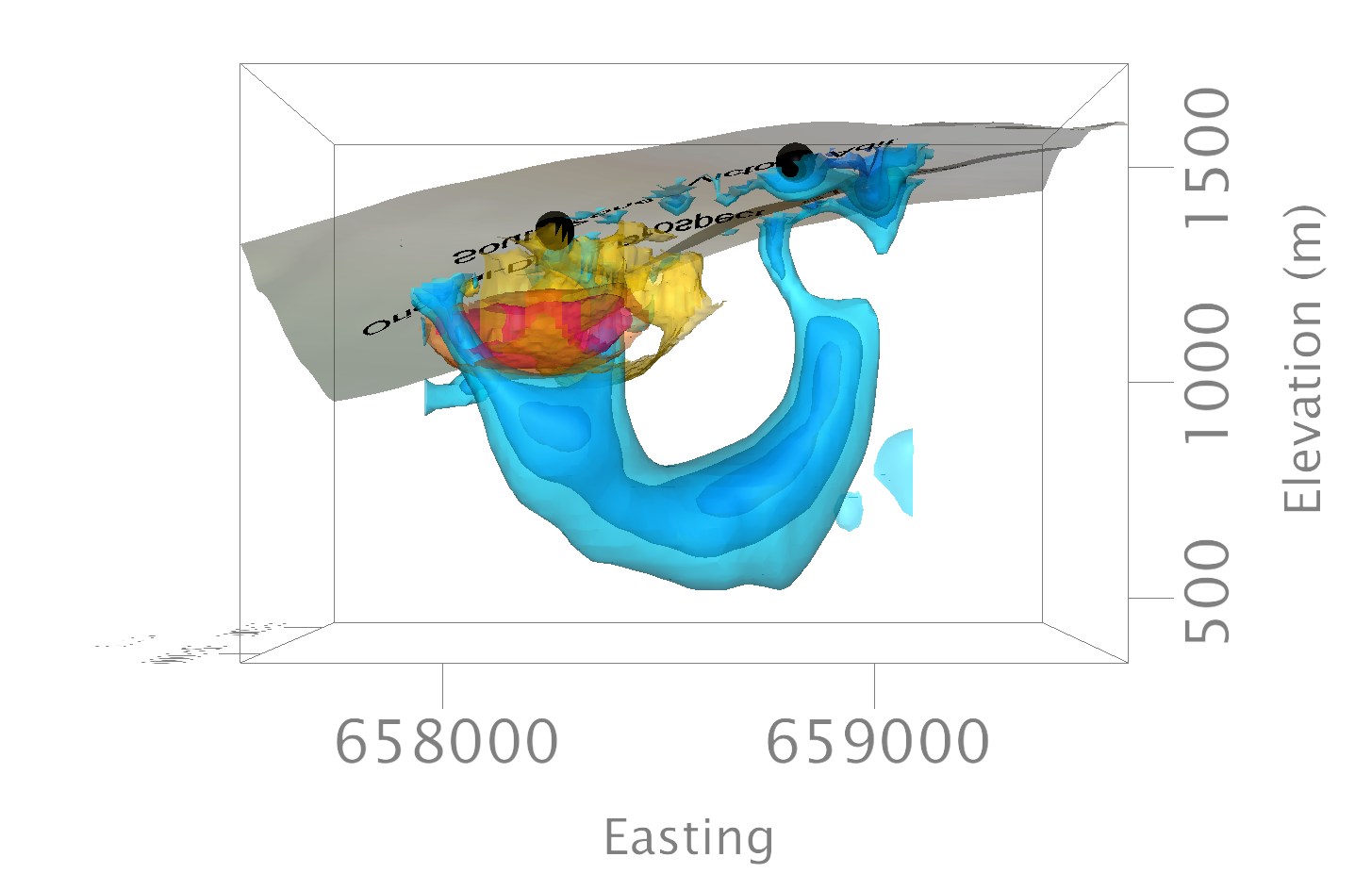
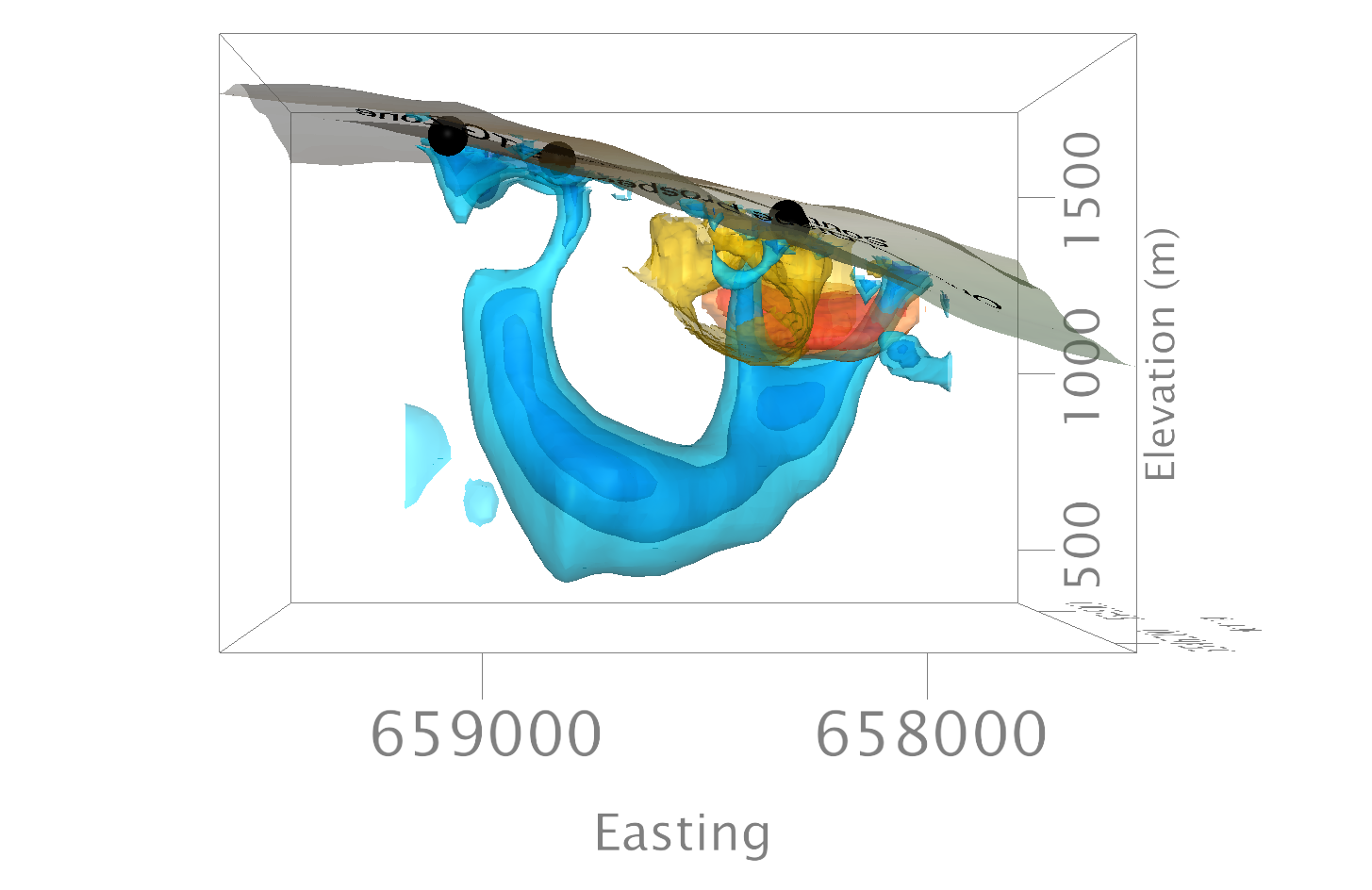
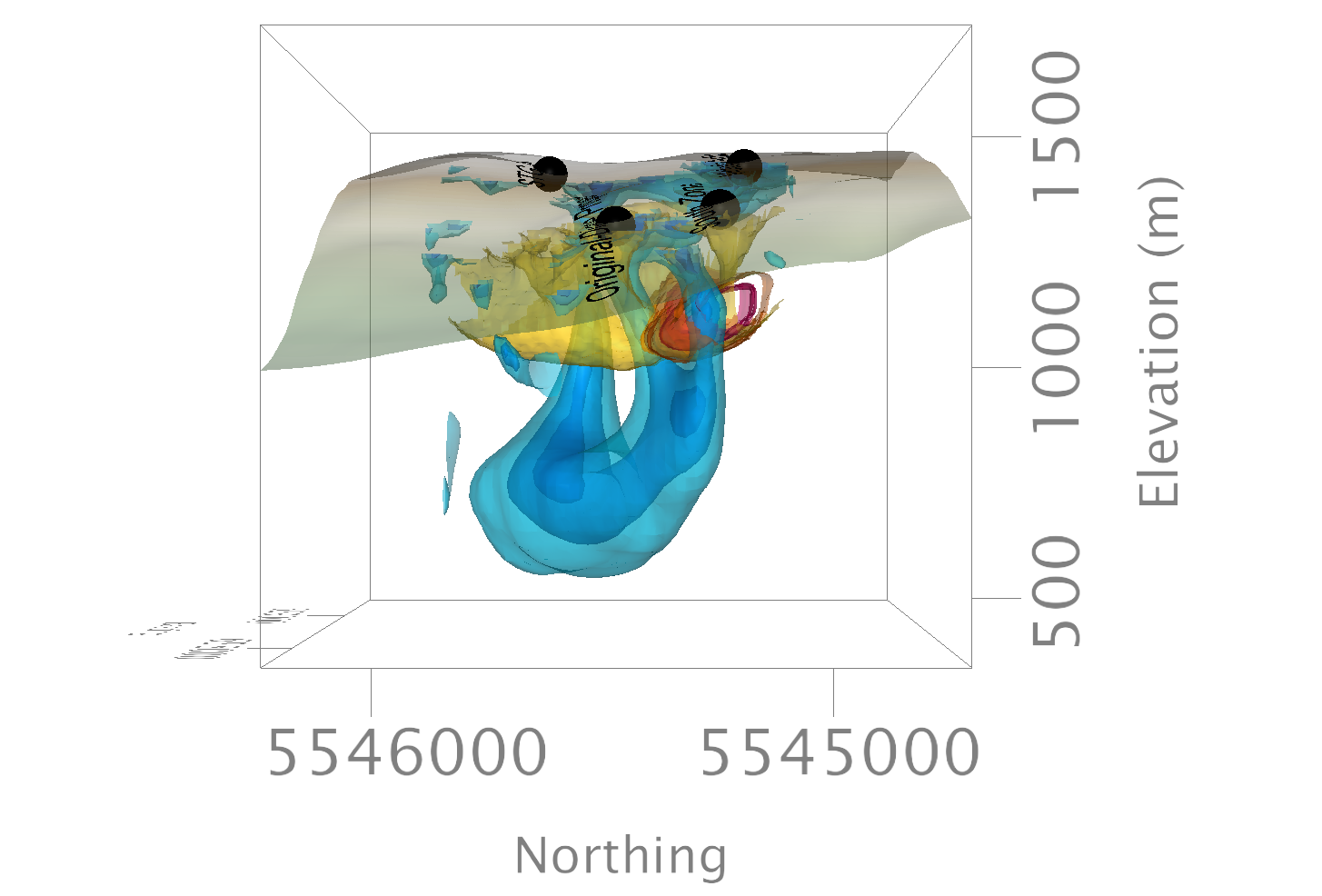
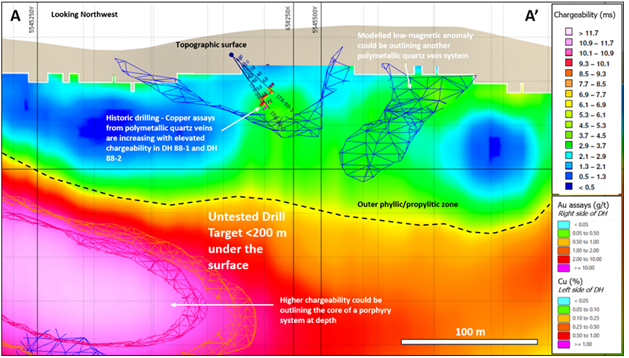
1988 Original-Diane historical drilling vs modern geophysical anomalies
1988 historic drill collar locations at the Original-Diane zone with underlying IP geophysical survey completed in 2020. Modern geophysical data outlines a significant chargeability anomaly exists below historic drilling that remains open to the southwest and southeast. The Lowell zone and Victoria Adit occur along the edges of a magnetic anomaly, which may correspond to the intrusion that drove mineralization. Cross-section demonstrates the close relationship between mineralization and elevated chargeability. It is interpreted that the 1988 historic drilling may have intersected the outer propylitic/phyllic zone of an underlying porphyry system. The higher chargeability may be outlining the core of a porphyry system and represents a compelling, near-surface target for future drill programs.
Size potential — fertile porphyry signature
- Alteration at Diane-Original defines the system margins. Historic drilling on these edges returned up to 0.53% Cu and 0.36 g/t Au over 12.8 m
- Peak thermal maturity aligns with large chargeability anomalies, evidence of a near-surface, large mineralized system
- Comstock and Trench D exhibit pervasive muscovite (phyllic) alteration characteristic of proximity to a porphyry core
- Overlapping datasets define a largely untested mineralized system with multiple priority targets
Sources
- 1. Nelles, D.M. — Diamond Drilling Report on the Stirling Group (Diane 1-5 Mineral Claims) for Abermin Corporation. July 20, 1988. AR 17721.
- 2. Cavey, G. et al. 1986. Report on Detailed Geological, Geochemical, and Geophysical Surveys for International Maple Leaf Resource Corporation on the Stirling Group (Diane 1-5 Mineral Claims). BC Geological Survey Assessment Report.